- 330-790-5007
- info@thepuppylodge.com
- Nationwide Delivery


If you are looking for Miniature Dachshund puppies for sale, you already know what pulled you in. That long, low body. The oversized personality is packed into a dog that barely clears your ankle. The way a mini doxie will burrow under a blanket, pop its head out, and stare at you like it just claimed the entire couch. Dachshunds have a way of making people laugh every single day, and once you have lived with one, no other breed feels quite the same.
What makes the Miniature Dachshund special goes beyond looks. These are smart, loyal, and surprisingly bold little dogs that were originaly bred in Germany to hunt badgers. This gives them courage, independence, and a nose that never stops working. It also gives them a little stubborn streak and a bark that sounds like a dog three times their size. Those traits are not flaws. They are features. But they do mean this breed needs a breeder who understands how to develop a doxie puppy from day one so that boldness shows up as confidence, not behavior problems.
At The Puppy Lodge, we raise Miniature Dachshund puppies on our 5-acre family farm in Ohio, and we have built our program around producing wiener dog puppies that are healthy, well-adjusted, and ready for family life from the moment they come home. Every breeding dog is genetically tested before producing a litter. Every puppy receives Early Neurological Stimulation starting on day three. Our veterinarian examines each litter. And our 3-year health guarantee is one of the longest in the Miniature Dachshund space because we stand behind what our testing and care produce.
Whether you call them a mini dachshund, a sausage dog, or just the best little dog you have ever met, the page below will walk you through exactly how we breed, raise, and prepare each puppy for your home.
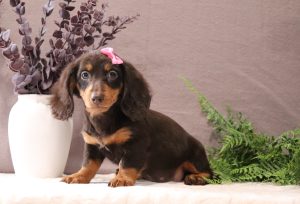


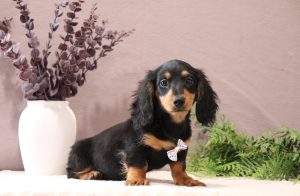
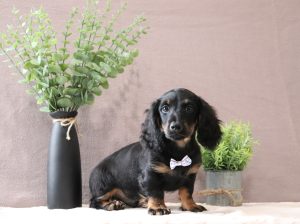
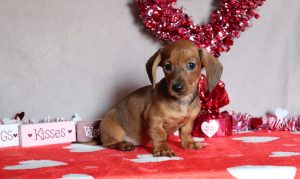
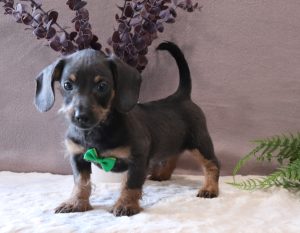
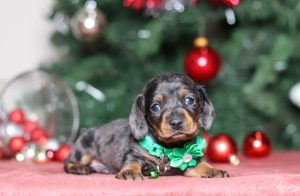
Miniature Dachshunds are bold, loyal little dogs with big personalities, but that confidence needs to be shaped early. A Dachshund that is not socialized and handled regularly as a young puppy can become stubborn, nippy, or overly protective. Our kids are in with the puppies from the time they are born, picking them up, carrying them correctly, and getting them comfortable being handled by people of all ages. We are a family of nine with five girls and two boys, and those seven kids give every litter the kind of unpredictable, real-world handling and love that no amount of adult-only socialization can replicate. For a breed that needs to learn early how to be a good family dog, that daily hands-on time makes all the difference.
Every puppy goes through Early Neurological Stimulation between days 3 and 16, which strengthens cardiovascular development, builds stress tolerance, and improves the immune system. The ENS protocol was originally developed by the U.S. military’s Bio Sensor program for working dogs, and the results of ENS have been well documented across decades of research. For Miniature Dachshunds specifically, ENS matters because this breed can be prone to anxiety-driven behaviors like excessive barking, resource guarding, and separation distress. A mini doxie puppy with a stronger neurological foundation handles new environments, strangers, and alone time with noticeably more confidence than one that never received it.
Every breeding dog in our program is genetically tested before producing a litter. For a breed where the health of the parents directly shapes the health of every puppy, testing is not optional. We stand behind what our program produces with a 3-year health guarantee covering genetic and congenital conditions. Most Dachshund breeders only offer one year or less. Some only hand you a 30-day pet insurance certificate and call it a guarantee. Ours lasts three years because the work we do on the front end gives us the confidence to back it up on the other side.
Our vet at Danville Veterinary Clinic visits our kennel every week to check on our dogs and puppies. That is not an emergency-only arrangement. It is a scheduled weekly visit where our dogs and puppies are examined, growth is tracked, and anything unusual is caught early.
Our puppies are raised in our kennel, which is climate controlled with heated tile floors in the winter and geothermal cooling in the summer. Our adults and puppies have large outdoor play areas on our 5-acre farm in Central Ohio, where they get exercise and fresh air. For a breed that can be prone to weight gain, that daily outdoor activity from a young age helps build healthy habits and the kind of lean muscle tone that supports a Dachshund’s long back. We are certified through the Purdue University Canine Care Program, one of the few breeders in the country who hold that certification. We have been doing this for over 13 years, we welcome visitors by appointment, and we deliver puppies nationwide right to your door. Every puppy comes home up to date on vaccinations, dewormed, microchipped, and with a blanket carrying mom’s scent to ease the transition.
| Breed Type | Purebred, AKC Hound Group |
|---|---|
| Height | 5 to 6 inches |
| Weight | 11 lbs and under |
| Lifespan | 12 to 16 years |
| Coat Type | Three varieties: smooth, longhaired, or wirehaired |
| Shedding | Moderate |
| Energy Level | Moderate |
| Exercise Needs | 30 to 45 minutes daily |
| Trainability | Moderate, can be stubborn, responds well to positive reinforcement |
| Good With Kids | Yes, with supervision for young children |
| Good With Other Pets | Yes, with early socialization |
| Temperament | Bold, loyal, playful, curious, courageous, and affectionate |
The Miniature Dachshund is a purebred dog in the AKC Hound Group, with roots dating back to the 15th century in Germany. The name Dachshund means “badger dog” in German. German nobility developed these dogs to hunt burrowing game, using their long, low bodies and short powerful legs to follow badgers, rabbits, and foxes straight into underground tunnels. The standard Dachshund handled larger prey like badgers, while the Miniature was developed later through selective breeding to pursue smaller game like rabbits and weasels. That hunting background is still very much alive in the breed today. A mini doxie on a walk will put its nose to the ground and track a scent with the kind of focus and determination that most people do not expect from a dog this size. Dachshunds are one of the most recognized and popular breeds in America, ranking sixth in AKC registrations in 2024. They are also one of the most searched-for breeds online, and you will find them listed under a handful of nicknames depending on who you ask. Wiener dog is the most common, a reference to the frankfurter sausage that German immigrants brought to America around the same time they brought their Dachshunds. Sausage dog is the same idea and is especially popular in the UK and Australia. Doxie is the modern shorthand that has been in use since the late 1800s. Mini doxie, mini dachshund, and dachsie are all variations you will see as well. Regardless of what you call them, they are all the same breed.
Miniature Dachshunds are classified by weight under AKC standards. A Miniature must weigh 11 pounds or less at one year of age. Standard Dachshunds usually weigh somewhere between 16 and 32 pounds. There is no officially recognized “tweenie” size, though some breeders use that term for dogs that fall between 12 and 15 pounds. Our Miniature Dachshunds typically mature, weighing around 8 to 11 pounds and stand only about 5 to 6 inches tall at the shoulder. Their build is unmistakable. The elongated body, deep chest, and short muscular legs give them a silhouette that no other breed shares. That body shape is what made them so effective underground, but it also means owners need to be mindful of back health throughout the dog’s life.
Miniature dachshunds have three coat varieties, including smooth, longhaired, and wirehaired. The Smooth coat Dachshunds have short, sleek fur that lies close to the body and requires weekly brushing. Longhaired Dachshunds have soft, flowing fur that can be either straight or slightly wavy and should be brushed several times a week to prevent matting, especially behind the ears and along the chest. Wirehaired Dachshunds have a rough, wiry outer coat with a softer undercoat and need regular hand-stripping or clipping in addition to brushing. All three varieties shed moderately year-round. At The Puppy Lodge, we only raise short-haired and long-haired Miniature Dachshunds. Our puppies are available in Blue, Blue and Tan, Chocolate and Tan, Chocolate and Tan Dapple, Black and Tan, Red, Blue and Tan Dapple, Sable, and Sable Merle.
Miniature Dachshunds are bold, curious, and fiercely loyal. They form deep bonds with their families and want to be involved in everything happening in the house. They are playful, affectionate, and love nothing more than curling up on the couch with their people at the end of the day. They are also surprisingly courageous for their size and will alert you to anything happening around the house, which makes them effective little watchdogs. That alertness does come with a vocal streak, and Dachshunds will use their bark freely. The FAQ section below covers how to manage it. Dachshunds are intelligent dogs, but they are also independent thinkers. That independence was an asset when they were making split-second decisions underground chasing game, and it is still very much part of the breed today. It means training a Dachshund requires patience and consistency, but the intelligence behind that stubbornness also means they are capable of learning far more than most people give them credit for. They do well with children and other pets when properly socialized from a young age.
Intervertebral Disc Disease (IVDD) is a condition where the dogs cushioning discs between the vertebrae in the spine degenerate or herniate, potentially causing pain, nerve damage, or, in severe cases, paralysis. Dachshunds are predisposed to IVDD just because of their elongated spinal structure. Genetics in parents plays a big role in determining which dogs are more likely to develop IVDD and which are not. Our breeding program screens parent dogs and selects only those with sound spinal structures, thereby significantly reducing the likelihood of disc problems in their offspring. When evaluating any Dachshund breeder, ask specifically what genetic and structural screening is done on the parents and whether back health is factored into breeding decisions. The answers to those questions tell you a lot about how seriously a breeder takes this issue. The FAQ section below covers what you can do as an owner to protect your Dachshund’s back.
Miniature Dachshunds only need around 30 to 45 minutes of daily exercise, which can be split across two shorter walks and some indoor playtime. They are very active, curious, and enjoy exploring on a leash, and their strong scent drive means walks tend to involve a lot of stopping to smell and investigate. They do well living in smaller apartments because their moderate energy level makes them adaptable to many living situations. The key is keeping them moving without straining their backs. Long walks on flat ground are ideal. Try to avoid activities that involve jumping, sharp turns at high speed, or repetitive stair climbing. Puzzle toys and scent games are excellent ways to tire out a Dachshund mentally without any physical risk to the spine.
Miniature Dachshunds are a long-lived breed. With proper care, nutrition, and regular veterinary attention, they typically live 12 to 16 years, and many reach their mid-teens in good health. Their smaller size compared to standard Dachshunds gives them a slight longevity advantage, and responsible breeding that screens for genetic health conditions contributes to a longer, healthier life.
We use our newsletter to let people know when we have new litters available.