- 330-790-5007
- info@thepuppylodge.com
- Nationwide Delivery


If you are looking for Pomsky puppies for sale, chances are you found the breed on social media first. A short video of a blue-eyed, husky-looking puppy, small enough to hold in one hand, and suddenly, it is the only breed you want. The problem is that the same social media popularity that put Pomskies on the map has also flooded the market with breeders who have no business producing them. Some breeders are selling mixed breeds that are not actually Pomskies. Other breeders are advertising “teacup” sizes that do not exist in healthy breeding. Some will take a deposit, send a few photos, and disappear. If you have spent any time searching, you already know that figuring out who to trust is harder than finding the breed itself.
That is the reality of buying a Pomsky right now, and it is the exact reason we are transparent about everything we do. We are a family of nine with over 13 years of breeding experience on our farm in Central Ohio. We are one of the few breeders in the country certified through the Purdue University Canine Care Program, and we will explain exactly what that means further down this page. Every Pomsky we produce comes with a 3-year health guarantee, and we will walk you through exactly what that covers as well.
If you are looking for a Pomsky from a breeder who will show you the parents, walk you through the health testing, and answer every question you have before you put down a dollar, you are in the right place.
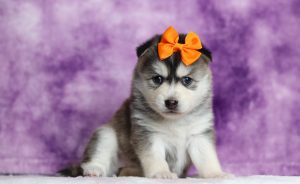
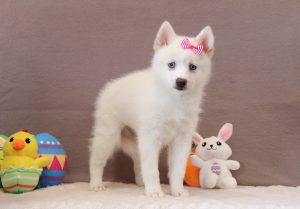
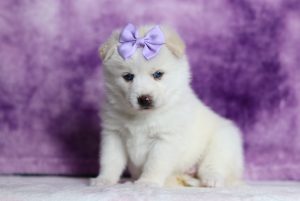
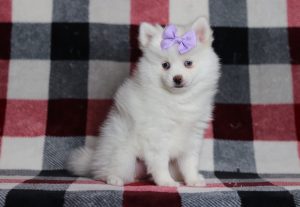
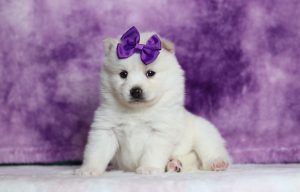
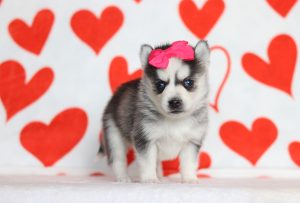
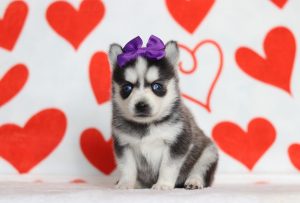
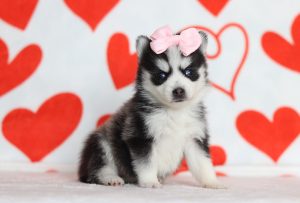

Pomskies inherit traits from two breeds that are both intelligent and strong-willed. The Husky side brings independence and energy. The Pomeranian side brings alertness and a tendency to vocalize. When those traits show up in a puppy that has not been properly socialized, the result is a dog that can be reactive, stubborn, and difficult to manage. That is why how a Pomsky is raised in its first eight weeks matters as much as the genetics behind it. Our kids are in with the puppies every single day from the time they are born. They are holding them, carrying them around, and getting them used to the noise and activity of a family with seven children, other dogs, and constant foot traffic. A Pomsky that grows up in that environment learns early how to handle stimulation without overreacting. By the time our puppies leave, they have been handled by more people more often than most breeders can offer, and that shows in how quickly they settle into their new homes.
Every puppy born here goes through Early Neurological Stimulation between days 3 and 16. This is a series of five brief exercises performed once a day during a critical window of neurological development. The protocol was originally developed by the U.S. military’s Bio Sensor program and has been shown to produce stronger cardiovascular performance, greater stress tolerance, and improved immune response. For a breed that can be reactive to new environments and unfamiliar situations, ENS gives Pomsky puppies a measurable advantage in how they process change. Most breeders either do not know about it or do not take the time to do it. We do it with every single litter.
All of our parent dogs are healthy and genetically tested before they ever produce a litter. We know the genetic makeup of every dog in our program, and we screen for the hereditary conditions that can affect both Siberian Huskies and Pomeranians. That information drives every breeding decision we make, because the healthiest puppies come from pairings where both parents have been fully vetted. The breed education section below covers the specific conditions buyers should ask about. Every puppy is backed by our 3-year health guarantee covering genetic and congenital conditions. Most Pomsky breeders offer one year or two at best. Some hand you a 30-day pet insurance certificate and call it a health guarantee. Ours is a real guarantee written by us, backed by us, and lasting three full years.
Our vet at Danville Veterinary Clinic does not just see our dogs when something goes wrong. He visits our kennel every single week to check on our adults and our puppies. That kind of ongoing veterinary oversight is rare in any breeding operation and almost unheard of in the Pomsky space. On top of that, we are certified through the Purdue University Canine Care Program. Purdue’s veterinary team inspects our kennel, evaluates our breeding practices, and reviews the way we raise our puppies. We are one of the few breeders in the country who carry this certification, and we have always exceeded their requirements.
Pomskies carry a thick double coat that handles cold weather well, but they are not built for extreme heat. Ohio summers can push into the 90s, and that matters when you are raising a double-coated breed. Our kennel is climate controlled with heated tile floors in the winter and geothermal cooling in the summer, keeping our dogs and puppies comfortable in every season. Outside, our adults and puppies have large play areas spread across our five-acre farm where they get the running and activity that this breed needs to stay happy and well-adjusted. Every puppy leaves our kennel up to date on vaccinations, dewormed, microchipped, and with a blanket carrying mom’s scent to help with the transition. We welcome visitors by appointment and deliver puppies nationwide right to your door.
| Breed Type | Designer hybrid, Siberian Husky and Pomeranian cross |
|---|---|
| Height | 10 to 15 inches |
| Weight | 10 to 30 lbs |
| Lifespan | 12 to 15 years |
| Coat Type | Double coat, thick, medium to long length |
| Shedding | Moderate to high, heavier in spring and fall |
| Energy Level | Moderate to high |
| Exercise Needs | 45 to 60 minutes daily |
| Trainability | Good, but can be stubborn, needs consistency |
| Good With Kids | Yes, with early socialization |
| Good With Other Pets | Yes, with early socialization |
| Temperament | Playful, intelligent, loyal, energetic, social |
The Pomsky is a designer breed created by crossing a Siberian Husky with a Pomeranian. Because of the noticeable size difference between the two parent breeds, responsible Pomsky litters are always produced through artificial insemination with the Siberian Husky as the mother. The first intentionally bred Pomsky litters in the United States appeared around 2012, making this one of the newer designer breeds on the market. Despite being less than 15 years old as a recognized cross, the Pomsky has become one of the fastest-growing breeds in the country, driven largely by their striking appearance.
Not all Pomskies are the same cross, and the generation of a Pomsky directly affects its size, appearance, and predictability of temperament. An F1 Pomsky is a first-generation cross, meaning one parent is a purebred Siberian Husky and the other is a purebred Pomeranian. F1 Pomskies tend to be the most variable in size and look because they are drawing equally from two very different breeds. An F1b Pomsky is the result of breeding a Pomsky back to a purebred Pomeranian, which typically produces a smaller dog with more Pomeranian influence in both size and coat. An F2 Pomsky is the result of breeding two Pomskies together. F2 and multi-generation Pomskies tend to produce more consistent and predictable results in terms of size, coat type, and temperament. We raise all variations of Pomskies, but we mostly raise F! and F2 variations.
Pomskies can range from small to medium in size, but their size can vary more than most buyers expect, especially in first-generation crosses. Pomskies as adults generally weigh anywhere between 10 and 30 pounds and stand 13 to 18 inches tall at the shoulder. Some breeders advertise “Standard”, “teacup” or “micro” Pomskies, but these terms are not recognized by any legitimate Pomsky organization. Breeding for extremely small size often comes with serious health risks. If a breeder is promising a Pomsky that will stay under 8 pounds, that should raise questions about the breeding practices behind it. The most reliable way to estimate adult size is to look at the size of both parents and understand the generation of the cross.
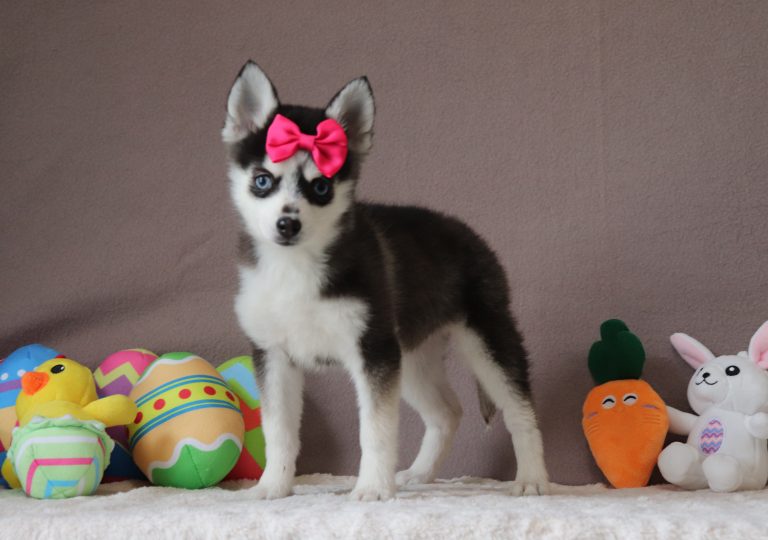
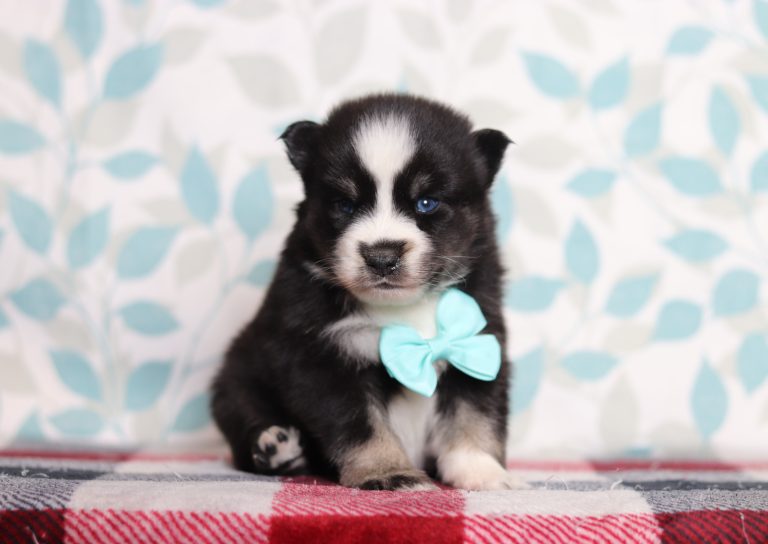
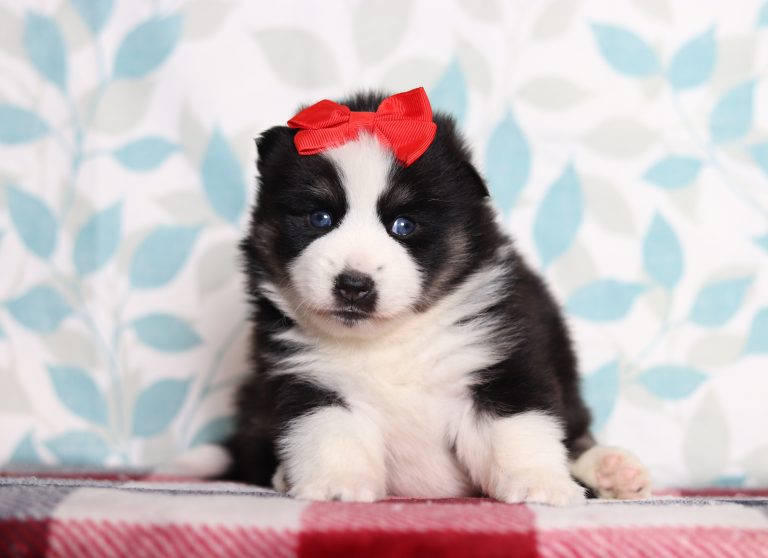
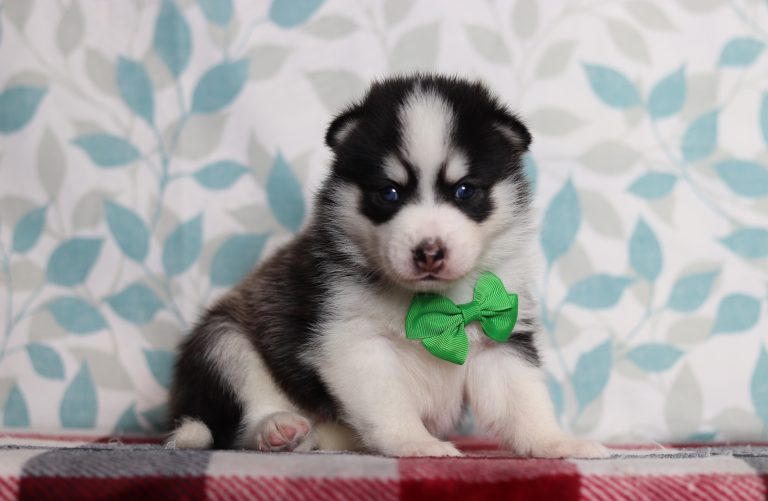
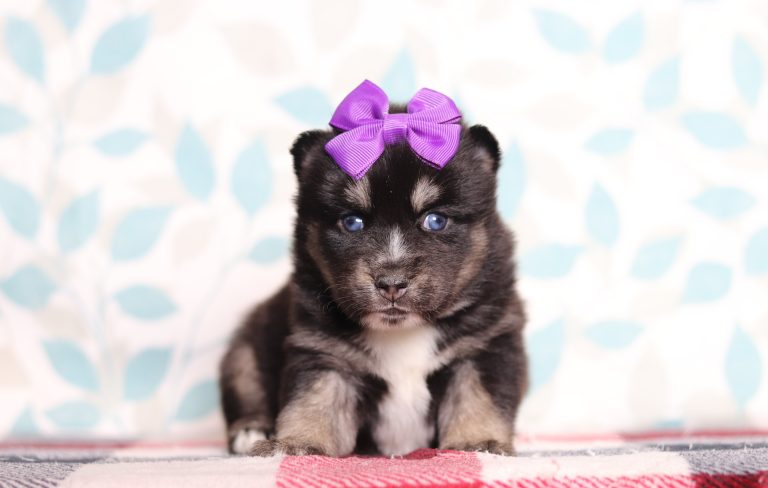
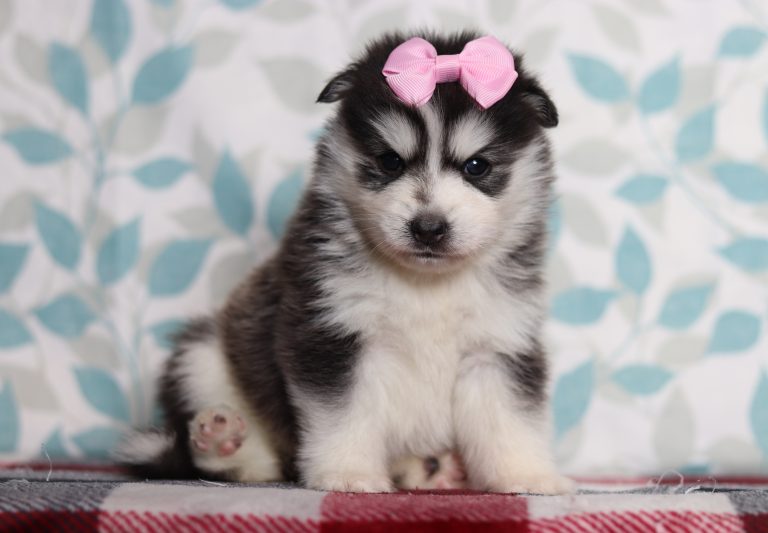
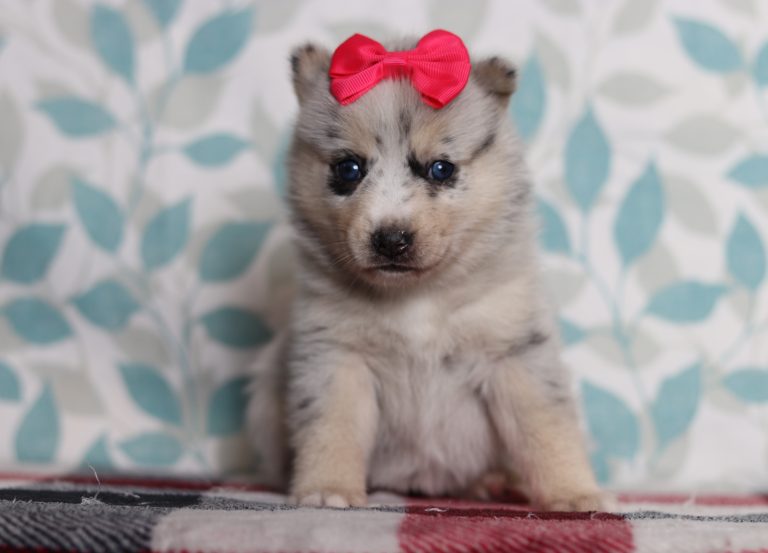
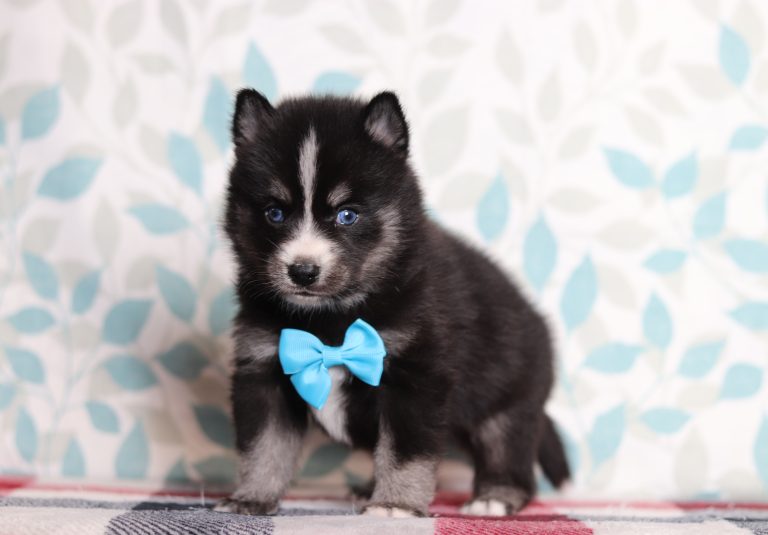
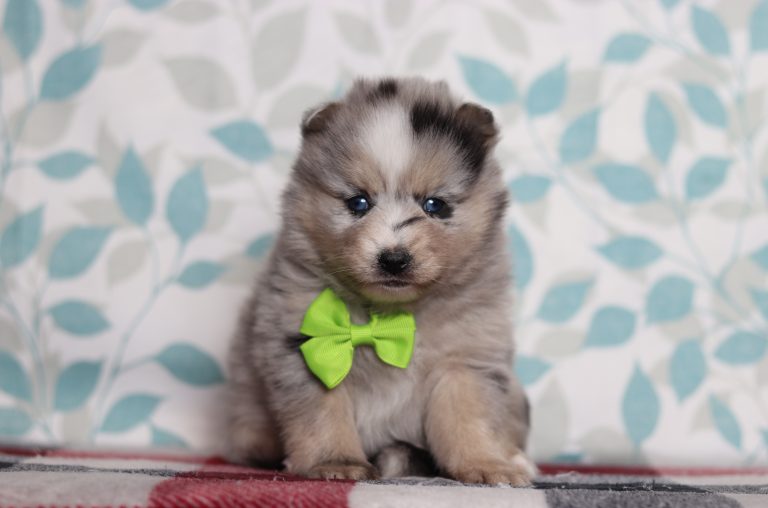
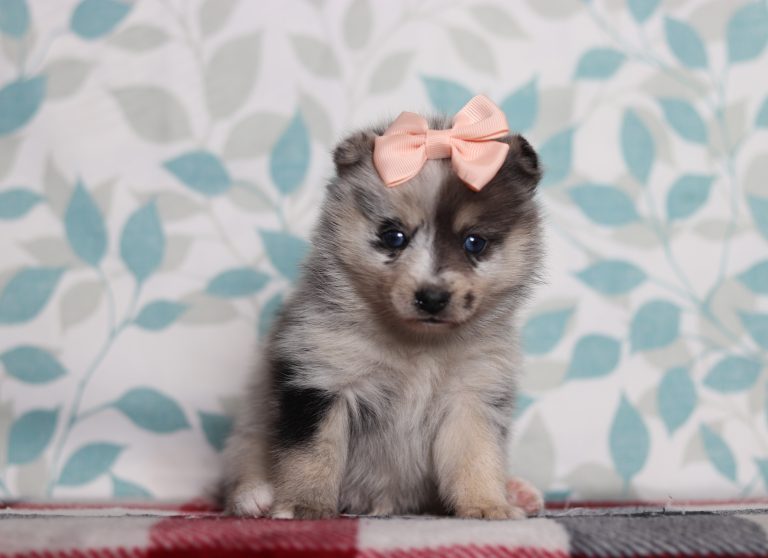
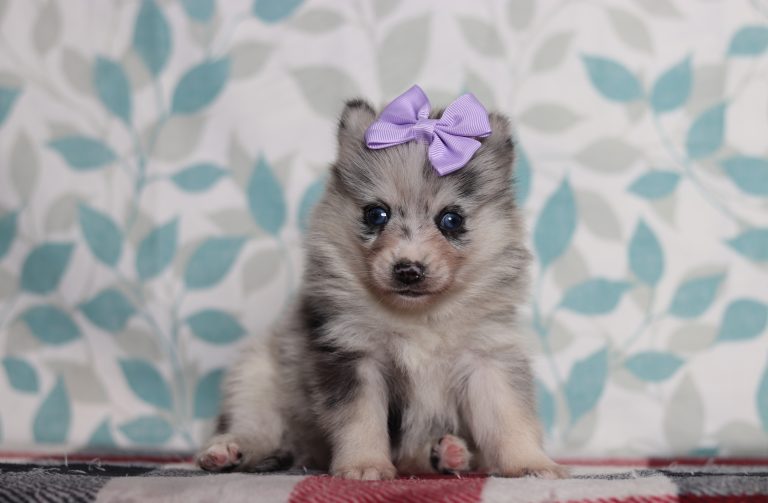
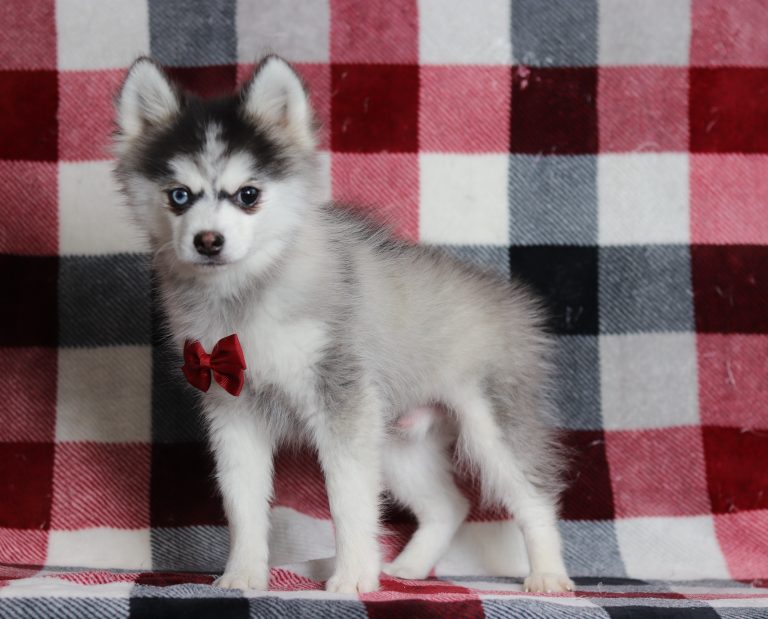
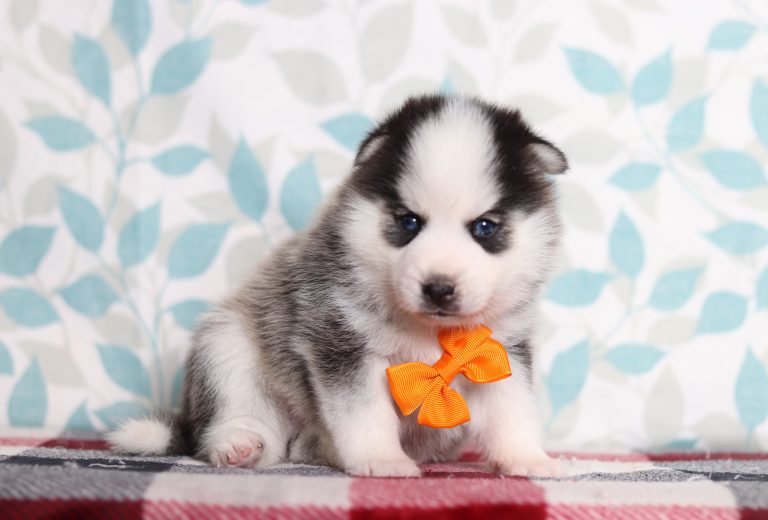
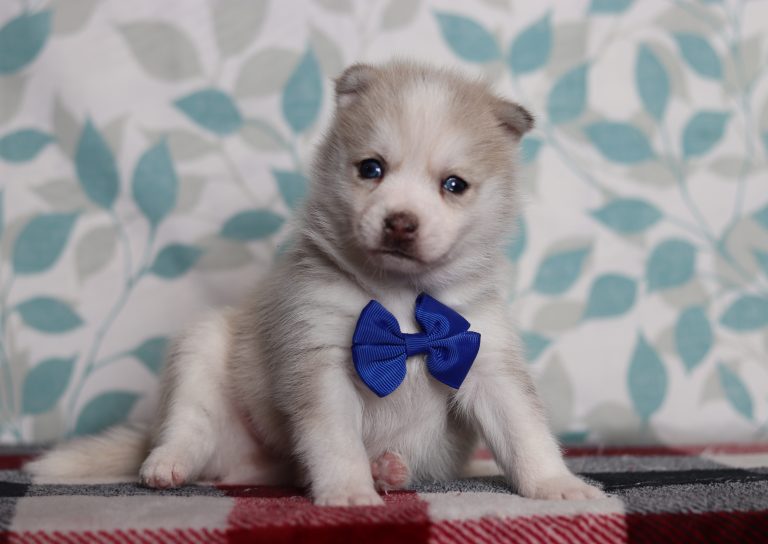
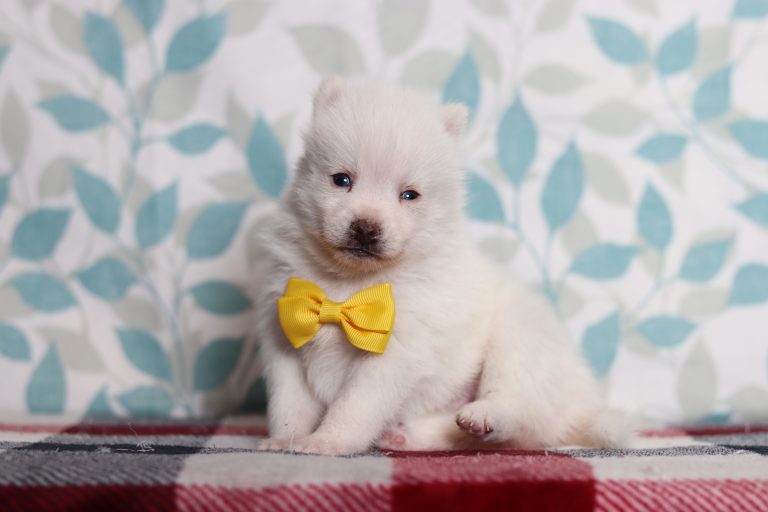
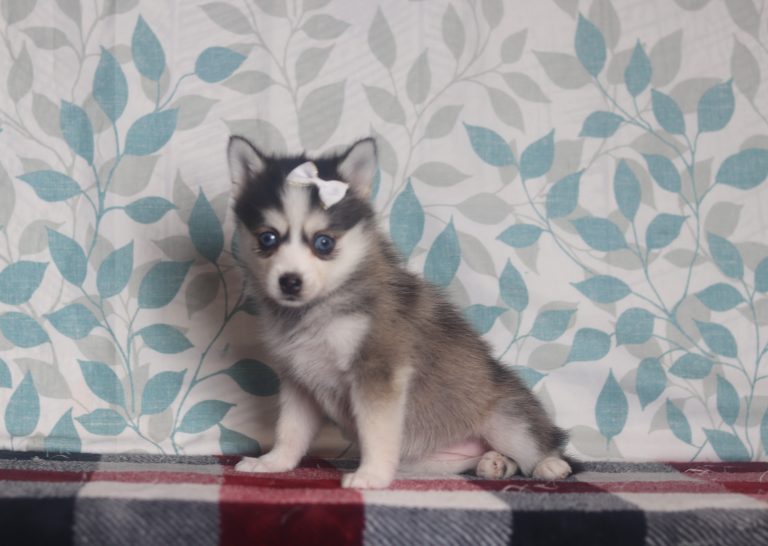
The look that draws most people to the Pomsky is the miniature Husky appearance: erect triangular ears, a thick plush coat, and expressive eyes set in a compact frame. Coat colors and patterns vary widely and can include black and white, gray and white, red, cream, sable, brown, merle, and solid white. Markings can range from classic Husky masks and spectacles to more Pomeranian-influenced solid patterns. One of the most talked-about features of the Pomsky is eye color. Pomskies can have brown, amber, blue, green, or hazel eyes. Some are born with heterochromia, where each eye is a different color, which is a trait inherited from the Siberian Husky side. Eye color is determined by the parents genetics and is usually apparent by the time a puppy is a few weeks old.
Pomskies are intelligent, energetic, and very social, and want to be involved in everything happening around them. They bond strongly with their new families and can be very affectionate and playful. This makes them entertaining to live with. Before committing to this breed, understanding their personality is important. The Husky side of the Pomskey can produce a stubborn, independent streak that can show up during training. The Pomeranian side of the breed can bring alertness that can turn into excessive barking if not addressed early. Pomskies can also develop a strong attachment to one person in the household, which is manageable but worth knowing about upfront. They do well with children when they have been socialized from a young age, though interactions with very young children should always be supervised because of the puppy’s small size when they are young. They usually get along with other dogs and pets when introduced properly.
This is not a low-energy breed because Pomskies need 45 to 60 minutes of real activity every day, including walks, play sessions, and mental stimulation. A Pomsky that does not get enough exercise will find ways to burn that energy on its own, and that might involve chewing, barking, or getting into things they shouldn’t. They are a good fit for active families, and people who enjoy regular walks or outdoor time, and households that can provide consistent daily engagement. They are not the right breed for someone looking for a dog that will always be content sitting on the couch all day. Mental stimulation they receive matters just as much as physical exercise does with this breed. Puzzle toys, training sessions, and new environments keep a Pomsky sharp and satisfied.
The Pomsky breed has a very thick double coat. This comes from both parent breeds also having double coats. The undercoat is very dense and insulating, and the outer coat is longer and can range from medium to long, depending on the individual dog and its generation. This breed has three unique coat types. The standard coat type is shorter and closer to the body. The plush coat type is medium-length and full. A dog with the woolly coat type is longer, thicker, and more closely resembles the Pomeranian parent. A Pomsky will need professional grooming every two to three months to help maintain a healthy coat, but Pomskies should never be shaved. Shaving a double-coated breed damages the coat structure and disrupts the natural temperature regulation the coat provides. The double coat insulates against both cold and heat, so removing it does not cool the dog down. It makes them more vulnerable to sunburn, overheating, and permanent damage to the dog’s coat.
Pomskies are considered a healthy breed. This is because they are benefiting from the genetic diversity that comes with crossing two purebred lines. Their average lifespan of Pomskies is 12 to 15 years, which is strong for a dog in their size range. Some of the health conditions to be aware of include hip dysplasia, patellar luxation, cataracts, progressive retinal atrophy, and allergies. The likelihood of these conditions depends heavily on the health screening of the parent dogs, which is why genetic testing of both parents is not optional when it comes to responsible Pomsky breeding. To ensure your Pomsky lives a long and happy life, the dog needs to come from genetically tested parents, receive proper vet care, and good nutrition.
The Pomsky breed is not recognized by the (AKC) American Kennel Club because it is a crossbreed, not a purebred. They can be registered through breed-specific organizations, such as the International Pomsky Association (IPA). Others include the Pomsky Club of America (PCA) and the American Pomsky Kennel Club (APKC). Several of these organizations are actively working toward eventual AKC recognition by establishing breed standards and encouraging consistent, multi-generation breeding practices.
We use our newsletter to let people know when we have new litters available.